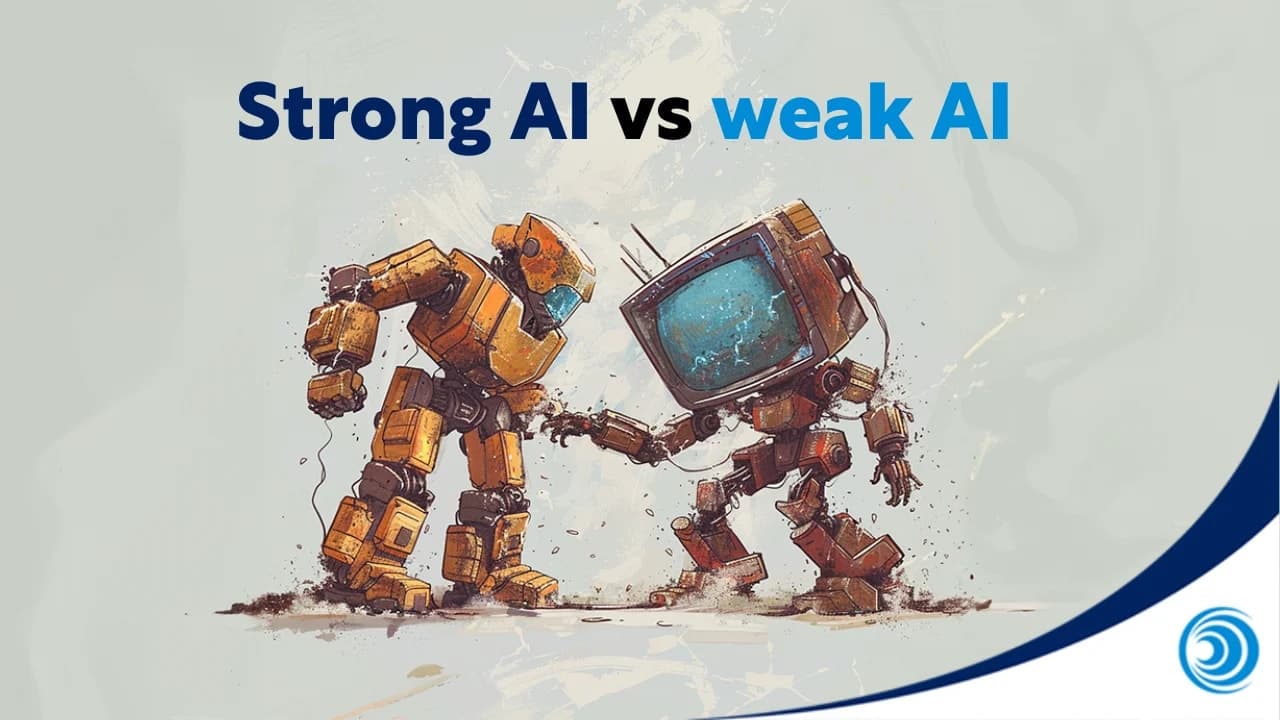
To understand today’s discussions about artificial intelligence (AI), it is important to distinguish between two broad concepts: Narrow AI and Artificial General Intelligence (AGI).
Narrow AI: The AI We Have Today
Narrow AI, also known as Weak AI, is the only form of AI that currently exists. It is called “narrow” because it is designed and trained to perform specific tasks within a limited domain. It operates within defined parameters and cannot independently extend its abilities beyond what it has been designed to do.
For example, a customer service chatbot can understand questions, process language and retrieve relevant information from a database. However, that same system may not be capable of analysing an image or driving a vehicle. Similarly, facial-recognition systems and AI programs capable of defeating world champions in games such as Go can perform exceptionally well within their respective domains, but they do not possess general knowledge or human-like awareness.
In other words, Narrow AI is a powerful tool, but it is not a human-like mind.
Artificial General Intelligence: Theoretical, Not Reality
Artificial General Intelligence (AGI), also referred to as Strong AI, remains hypothetical. It describes a theoretical machine capable of possessing the flexible and general intelligence associated with human beings.
A true AGI system would theoretically be able to understand, learn and apply knowledge across different fields. It would be capable of reasoning, solving unfamiliar problems and adapting to new situations without being restricted to a single task or domain.
Unlike current AI systems, AGI is often described as having genuine understanding rather than simply simulating it. However, this level of AI does not currently exist, and researchers continue to debate whether achieving it is technically possible.
Despite sensational claims and headlines, no AI system has been scientifically established as possessing human-like consciousness, self-awareness or fully general reasoning abilities. The AI shaping our world today remains fundamentally specialised.
The Perfect Storm: Why AI Exploded in the 21st Century
The current AI revolution did not appear suddenly. The foundational ideas behind AI emerged in the mid-20th century, but progress was slow for several decades. The field also experienced periods of declining investment and interest, commonly known as “AI winters.”
The rapid development of AI in the 21st century has been driven by the convergence of three major factors: massive amounts of data, powerful computing hardware, and advances in algorithms and AI models.
1. Massive Data
The digital age has generated an extraordinary amount of data. Smartphones, social media platforms, internet-connected sensors, online transactions and digital services have produced an enormous flow of information.
This data provides essential material for machine-learning systems to identify patterns, make predictions and improve their performance.
2. Powerful Computing
Advances in computing hardware, particularly graphics processing units (GPUs), have provided the processing power needed to train increasingly complex AI models.
GPUs were originally developed primarily for graphics and video-game applications. However, their ability to perform large numbers of calculations simultaneously makes them particularly effective for the parallel processing required by modern AI.
3. Advances in Algorithms and Models
The third factor has been progress in algorithms and AI architectures, particularly deep learning.
Researchers developed increasingly sophisticated neural-network architectures capable of learning complex and hierarchical patterns from large quantities of data. These developments significantly expanded what AI systems could accomplish.
The situation can be compared to the discovery of fire. The potential for fire existed in nature, but it required the right combination of fuel, oxygen and a spark to become transformative.
For AI, data is the fuel, computing power provides the energy, and algorithmic innovation is the spark. Their convergence in the early 21st century ignited the technological transformation we are witnessing today.
Amplification, Not Replacement: The Human-AI Relationship
Throughout history, major technological changes—from the printing press to the internet—have created fears about unemployment and human obsolescence. AI has generated similar concerns.
It is true that AI will automate certain tasks and potentially transform some jobs, particularly those involving routine and predictable cognitive or physical activities. However, viewing AI primarily as a technology for replacing workers overlooks a much broader transformation.
The more significant impact may be the way AI augments human capabilities.
AI can handle repetitive and data-intensive aspects of work, allowing people to focus more on tasks requiring creativity, strategic judgement, ethical reasoning and emotional intelligence—areas where machines remain fundamentally limited.
For example, a doctor using AI-assisted diagnostic tools may be able to spend more time on patient care and complex medical decisions. An architect could use AI to generate and evaluate thousands of design possibilities before refining the most promising ideas.
The future of work may therefore be less about humans versus machines and more about humans working with machines.
The combination of human judgement and machine capabilities could produce outcomes that neither could achieve as effectively alone.
The Fundamental Questions Beneath the Technology
As we explore AI, some of the most important questions go beyond algorithms and technical capabilities.
If machines learn from data, who controls that data?
Who decides what information is used to train systems that influence the news we see, the jobs we are considered for or the financial decisions made about us?
What ethical principles should guide the development and deployment of increasingly powerful AI systems?
And what happens to society when a technology with such enormous influence is designed and understood by a relatively small technical community while much of the public remains unaware of how these systems work?
These questions concern power, equality, accountability and public understanding.
The importance of AI is therefore not simply about the possibility of intelligent machines or futuristic robots. It is also about how technological systems distribute influence and shape decisions in the digital age.
The story of AI is ultimately a story about people: our choices, our institutions, our values and the society we want to build.
Understanding AI therefore requires more than learning how algorithms work. It also requires understanding the history of AI—its ambitious beginnings, periods of disappointment and renewed breakthroughs.
That history of experimentation, failure and perseverance provides an important foundation for understanding where AI may take us next.