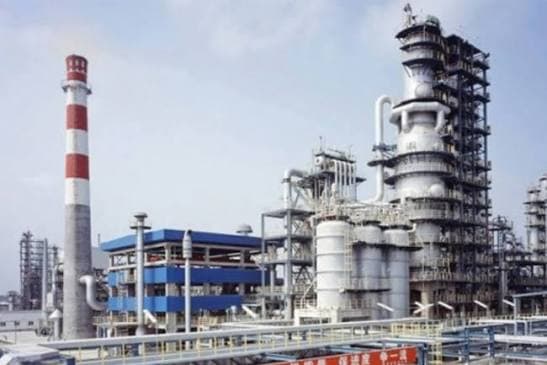
The Ceylon Petroleum Corporation (CPC) has planned to significantly expand the Sapugaskanda Oil Refinery by constructing a new refinery within the existing premises under a Build-Operate-Transfer (BOT) model.
The project is expected to double the refinery’s current capacity from 50,000 barrels per day to 100,000 barrels per day.
CPC Managing Director Mayura Neththikumara confirmed that the project is neither a privatisation nor a sale, and does not constitute a public-private partnership. Instead, it is a BOT-based infrastructure development project.
Ernst & Young is currently conducting a comprehensive business valuation of the refinery’s assets, which is expected to be completed by the end of October 2026.
During the request for expressions of interest for the project, responses were received from 20 international investors. The Technical Evaluation Committee has completed its review of the relevant proposals.
The final framework for inviting proposals from the shortlisted international investors is expected to be submitted to the Cabinet in the coming period.
The selected investor will provide the initial funding for the project, which is planned to be completed under a three-year programme.
Named SOREM (Sapugaskanda Oil Refinery Expansion and Modernisation), the project aims to make Sri Lanka energy self-sufficient, meet 100% of the country’s domestic fuel requirement and transform Sri Lanka into a regional fuel export hub.
The total capital investment required for the new system to be added to the existing refinery, which is around 60 years old, has been estimated at US$2.766 billion.
The project’s net present value is estimated at US$1.504 billion, while the internal rate of return is projected at 16.1% over a 20-year operating period.
Following a six-year capital payback period, the project is expected to generate between US$300 million and US$700 million annually. Cumulative cash flow over 20 years is projected to exceed US$9.12 billion.
Sri Lanka currently spends approximately US$4.23 billion annually on fuel imports. The government expects that doubling domestic refining capacity will help save a significant amount of foreign exchange currently spent on importing refined petroleum products.